PaidScale
What should a creative production service actually deliver?
Ecommerce ad creative production services should turn a defined product message into usable image or video ads, with agreed formats, documented permissions, clear approvals, and an organized handoff. Start by buying a solution to a specific production bottleneck: missing product demonstrations, slow editing, unclear messaging, or insufficient placement-ready assets.
The right provider depends on what your team already handles. An editor working from approved footage serves a different need from a partner researching angles, writing scripts, producing assets, and coordinating with your media buyer. Ask every shortlisted provider to price the same written brief. A large file count alone does not establish strategic variety or commercial value.
Separate concepts, variations, and exports
Define the unit being purchased before comparing proposals. A concept is a distinct customer argument or demonstration. A variation changes an element within that concept, such as the opening shot. An export adapts an approved execution for a placement or technical requirement. These distinctions are a practical procurement framework, not universal industry billing rules.
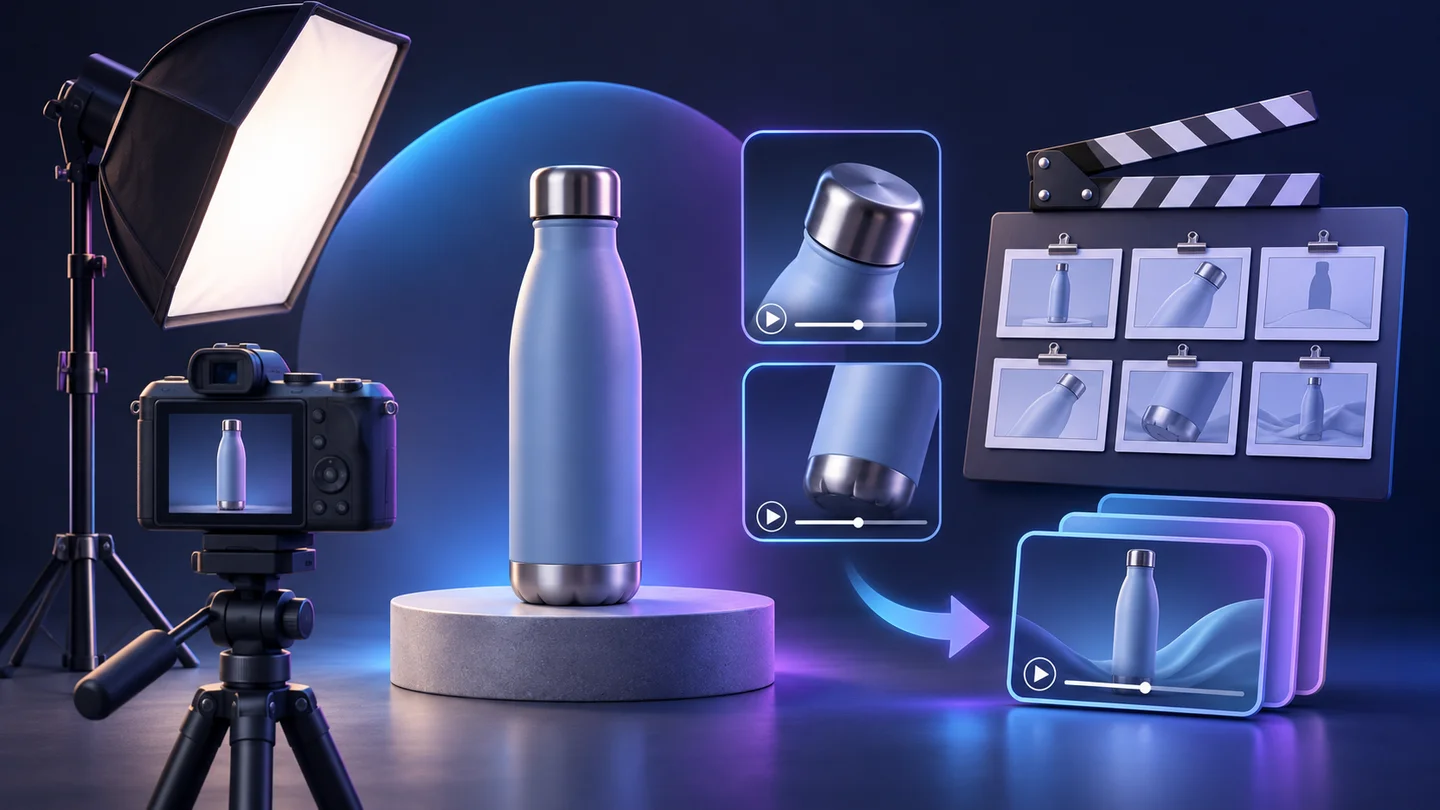
Hypothetical example: a reusable bottle brand commissions two concepts, one demonstrating how the lid closes and another showing how the bottle fits into a commuter’s routine. Each gets two opening treatments, producing four edited videos. Exporting each edit in two agreed aspect ratios creates eight files. The scope still contains two concepts, rather than eight different customer arguments.
Ask whether resizes, captions, translations, thumbnail images, and revised openings count toward the contracted creative allowance. Record the answer in the proposal. This prevents a service with many adaptations from being mistaken for one with extensive new concept development.
Choose the production model around your missing inputs
If you have strong footage and approved messaging, an editing-focused scope may be sufficient. If product benefits are difficult to explain, commission concept and script development before production. If demonstrations require new footage, settle product samples, filming responsibilities, and production costs before agreeing to delivery dates.
Creator-led production introduces another dependency: an available person, approved script, usable footage, and appropriate advertising permissions. AI-assisted visuals can support suitable concepts, but review product shape, packaging, function, and any implied results against reality. An illustration should never become fabricated evidence that a customer used a product or experienced a result.
- Editing scope: identify the footage supplied, approved scripts, captions, sound treatment, and finished files.
- New production scope: name the shoot, samples, locations, talent, and approvals that must be arranged.
- Connected service scope: specify who turns media findings into the next brief and who owns campaign implementation.
Write a brief that a provider can quote accurately
Give the provider enough information to make decisions without asking them to invent product facts. Use one short brief supported by asset folders and evidence. State the target country, customer situation, product, destination page, offer, and intended action. For a skincare brand, a texture demonstration and an unsupported treatment claim are very different production requests.
Include the commercial context that changes production priorities: available distribution budget, margins, stock, promotions, and previous results with dates and measurement definitions. A small media budget may justify a narrower first batch. Producing more assets than you can distribute and evaluate creates cost without necessarily creating learning.
- Product truth: approved benefits, substantiation, prohibited claims, current packaging, and accurate offer details.
- Customer evidence: common questions, objections, review themes, and permission to use any quoted feedback.
- Asset inventory: photography, raw footage, brand files, previous ads, and a list of missing inputs.
- Delivery matrix: concepts, edits, formats, language versions, captions, file types, and editable project files.
- Decision process: one feedback owner, approval stages, revision boundaries, and dependencies affecting timing.
Require placement-specific quality checks
Choose placements before filming or design. TikTok’s official creative guidance recommends vertical 9:16 production, at least 720p resolution, sound, and attention to interface safe zones. Its auction in-feed specifications separately define technical requirements by format. These are platform recommendations and requirements to check against the campaign, not evidence that a particular creative will sell.
TikTok also explains that safe zones vary with dimensions, caption length, and additional formats. Ask the provider to check the relevant current template and campaign preview instead of using one permanent text margin. For Meta or Google destinations, verify those placements’ current specifications separately rather than assuming the same export works everywhere.
Your acceptance check should include readable captions, an understandable product demonstration, clean audio, accurate offer details, and a clear next step. Preview each agreed version with its interface overlays. A technically accepted upload can still leave the product, message, or call to action difficult to see.
Make usage rights part of the asset register
Ask for a written record of the permissions covering footage, people, photography, music, and other third-party material. Clarify the platforms, territories, duration, paid-ad usage, and any creator account authorization involved. Editable files and ownership or licensing arrangements also need an explicit agreement; delivery of an MP4 does not answer those questions.
TikTok says businesses should use its Commercial Music Library for commercial TikTok activity rather than the general music library. Its usage instructions require selecting the campaign region and allow filtering by usable placements. Have the provider verify the selected track for the intended use and retain the relevant record. Do not assume that permission to use music on TikTok permits the same soundtrack in a Meta ad.
Treat a missing rights record as an unresolved delivery item. If you plan to reuse footage next quarter or in another country, settle that use before production, when replacement options are easier to arrange. Seek specialist review where the agreement or claim requires it.
Agree approvals and a usable handoff
Define approval gates for the brief, script or storyboard, first edit, and final export. Name one person who consolidates brand feedback, and distinguish correcting an error from commissioning a new concept. Agree revision rounds and the effect of late product changes before work begins.
The handoff should let another team member identify and launch the right asset without guessing. Request a shared register connecting each filename to its concept, hook, product, placement, language, version, approval status, and rights record. State whether the scope includes copy, thumbnails, source files, uploads, or campaign setup.
Review the first delivery against the written matrix. Check that the product shown matches the destination, captions survive placement cropping, the approved soundtrack is used, and files open correctly. Launch only approved versions, then preserve them separately from drafts to avoid accidental reuse.
Connect the next batch to business evidence
Agree who supplies post-launch feedback and when the next production brief is decided. Useful evidence includes delivery, spend, purchases, acquisition cost, and relevant video or click metrics with their reporting windows. A compelling opening can earn attention while the product argument still fails to generate purchases.
Do not ask a production partner to guarantee winners. Ask them to explain which customer question each concept addresses, which observations would justify another version, and what remains uncertain. Platform delivery can be uneven, so a low-spend asset may not support a firm verdict. The existing PaidScale creative-testing guide covers how to organize that learning process; this checklist helps you buy and accept the production work feeding it.
How PaidScale’s current plans fit this decision
PaidScale connects Shopify storefront work and improvements, platform connections and purchase tracking, Meta, Google and TikTok ads management, image and video ad production, creative testing, and reporting. The current monthly plans are Foundation at US$3,000 with three creatives per week, Growth at US$3,500 with five, and Scale at US$4,000 with eight.
These are connected service plans, not published standalone filming packages. Advertising spend, Shopify subscriptions, domains, apps, and other third-party costs are separate. Website scope, production requirements, revisions, and what counts as a creative are agreed before work begins. Confirm the format mix, source footage, and any creator or shoot requirements instead of assuming they are included.
Bring your store URL, target countries, current ad spend, available footage, and production bottleneck to a strategy call. That makes it possible to assess whether you need an editor, a focused production project, or a connected ecommerce growth service before choosing a plan.
Frequently Asked Questions
Does an ad resize count as a new creative?
It depends on the written contract. For comparing proposals, separate new concepts, edited variations, and technical adaptations, then confirm which of those count toward each provider’s allowance.
Should an ecommerce brand hire an editor or a full creative partner?
An editor can suit a team with approved scripts and usable footage. A broader partner may fit when customer research, messaging, production, and paid-media feedback also need coordination. Start with the missing capability and compare a common brief.
Sources
Published through PaidScale’s AI-assisted research workflow. Read our editorial standards.